about this piece
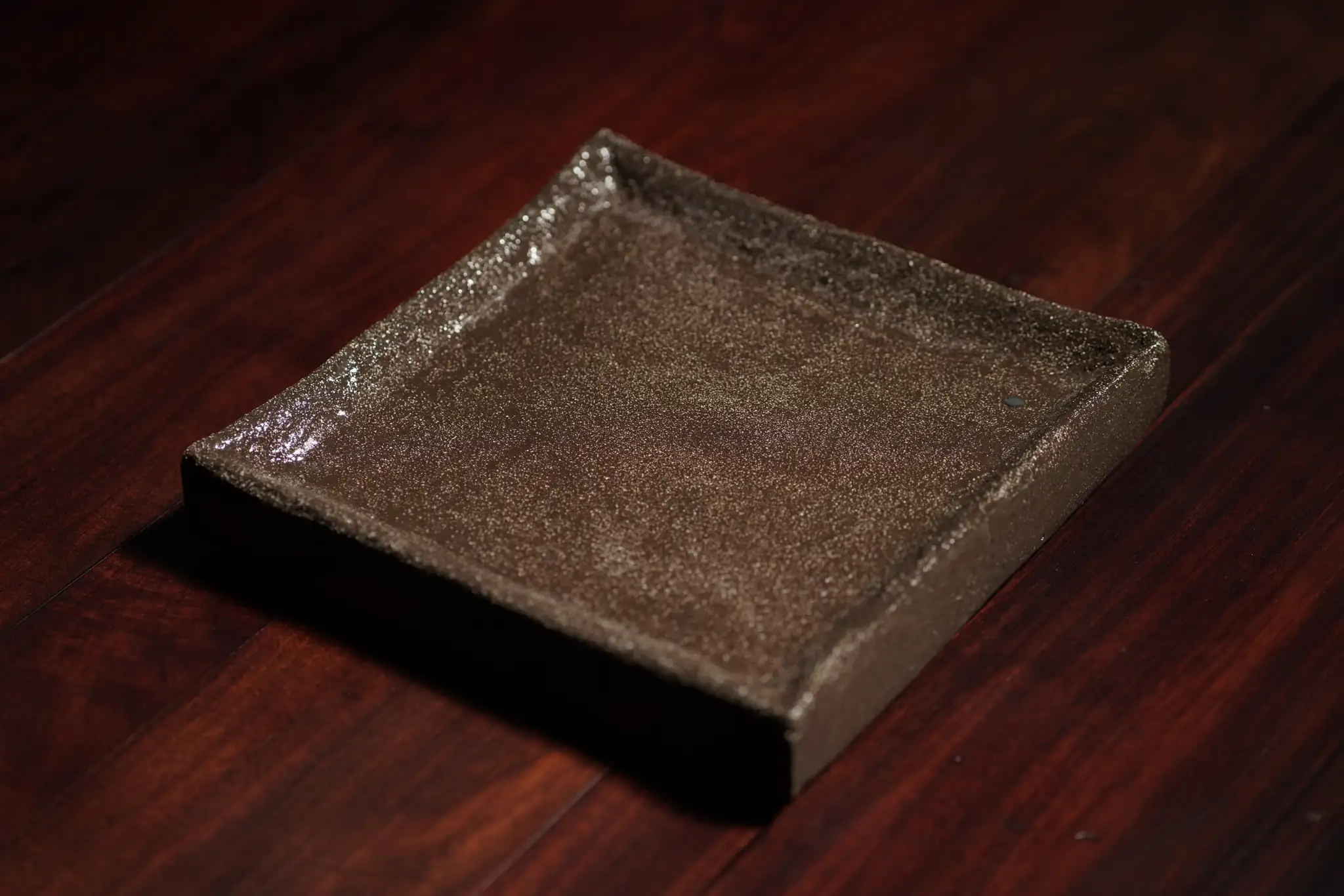
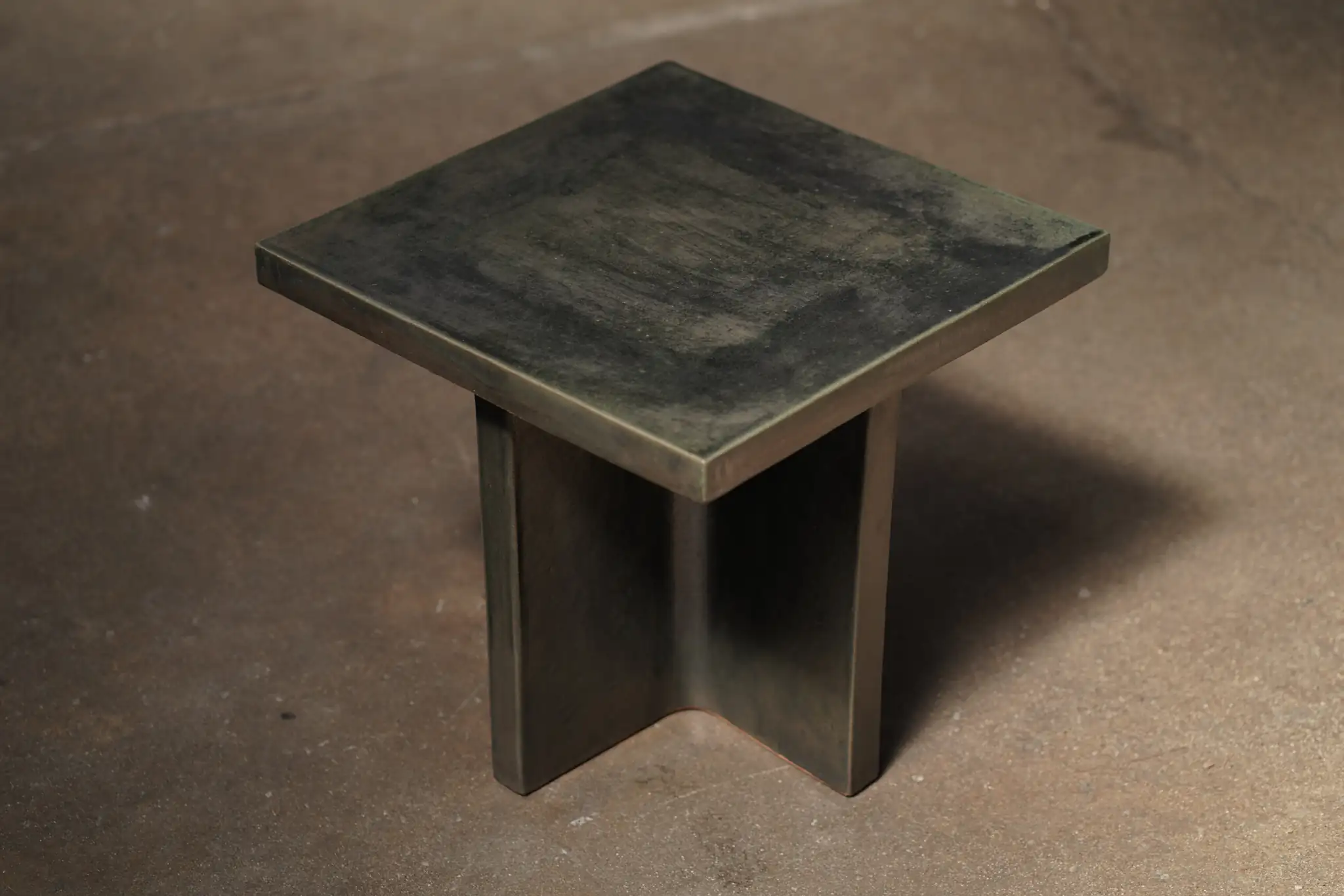
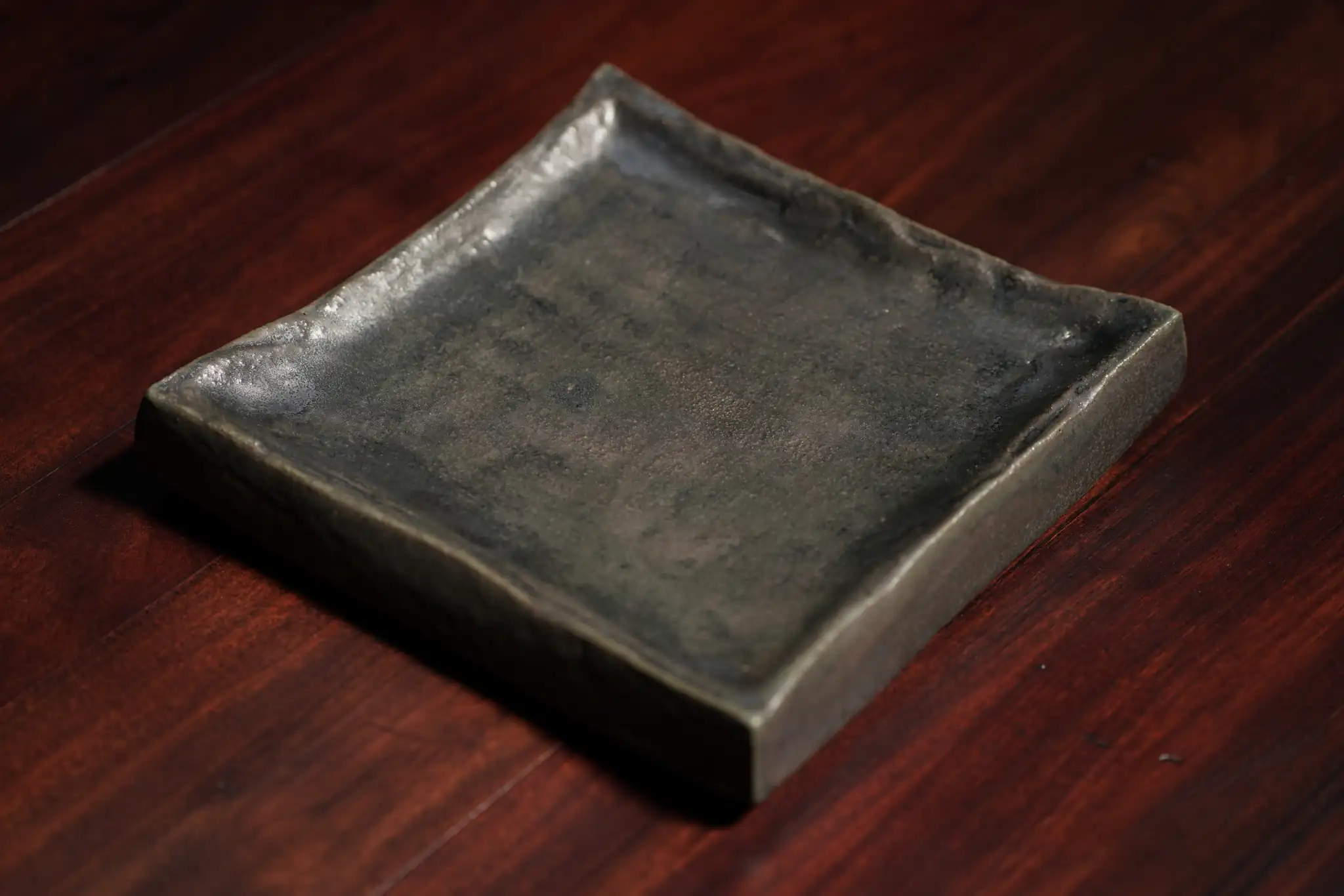
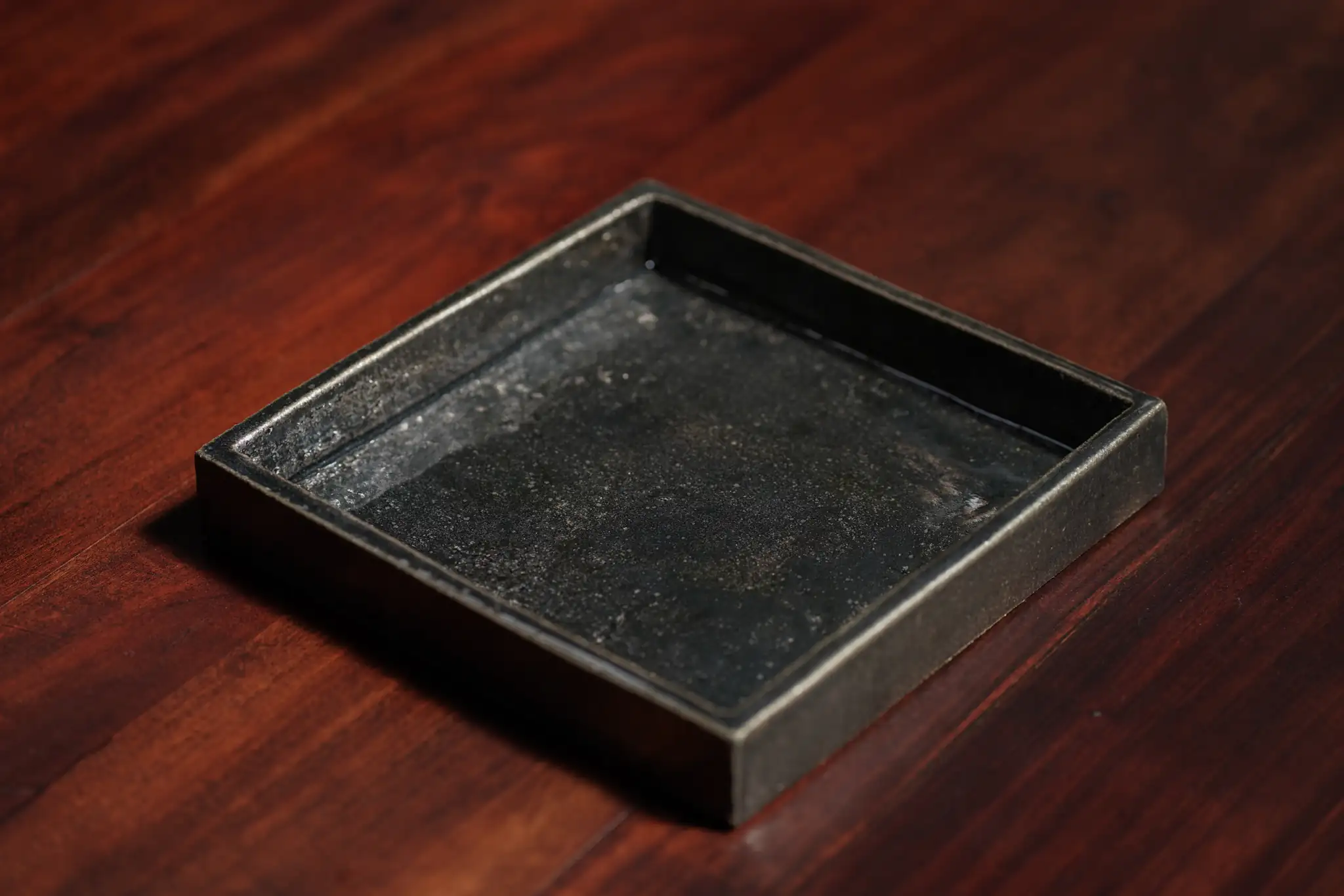
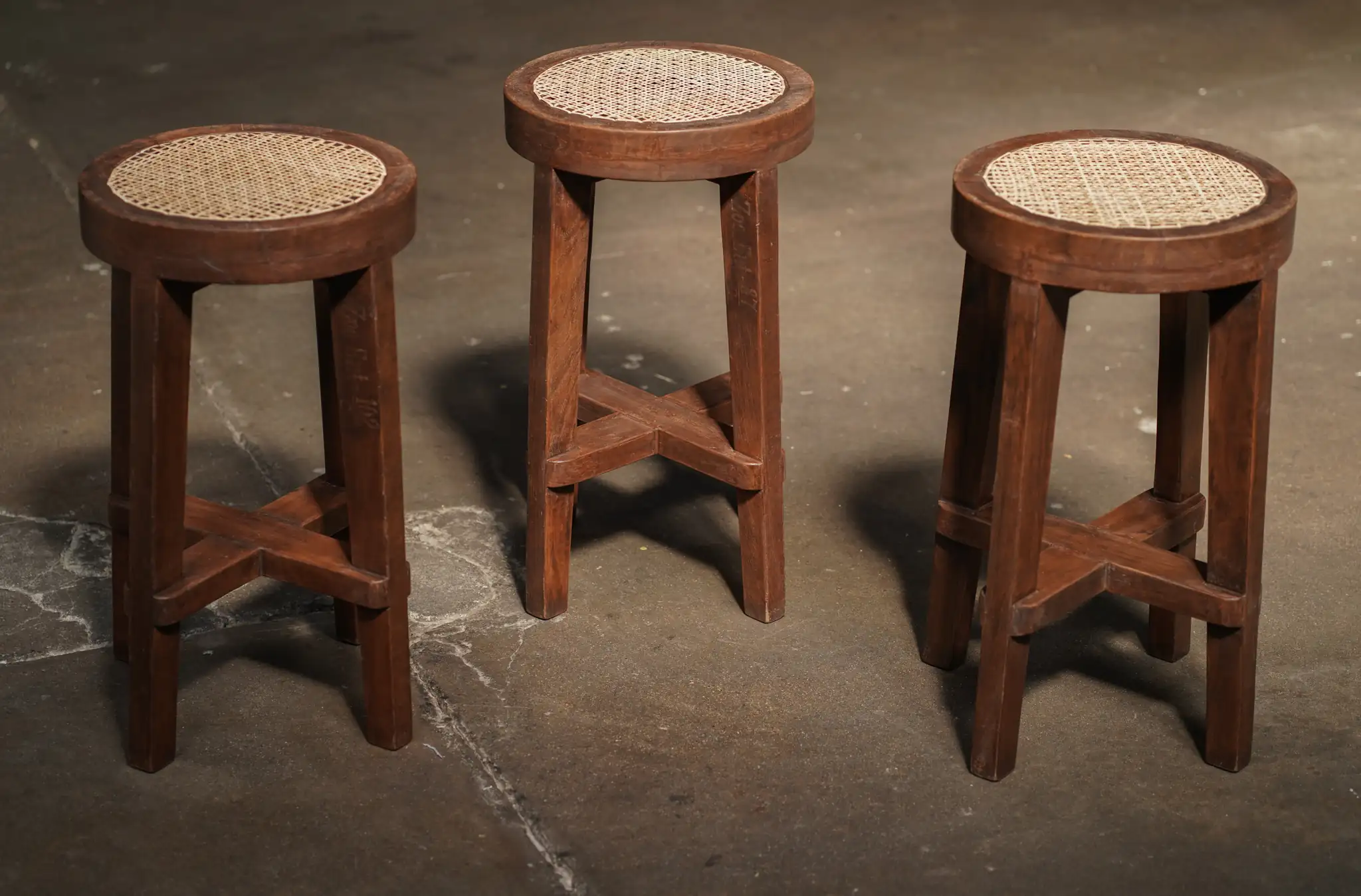
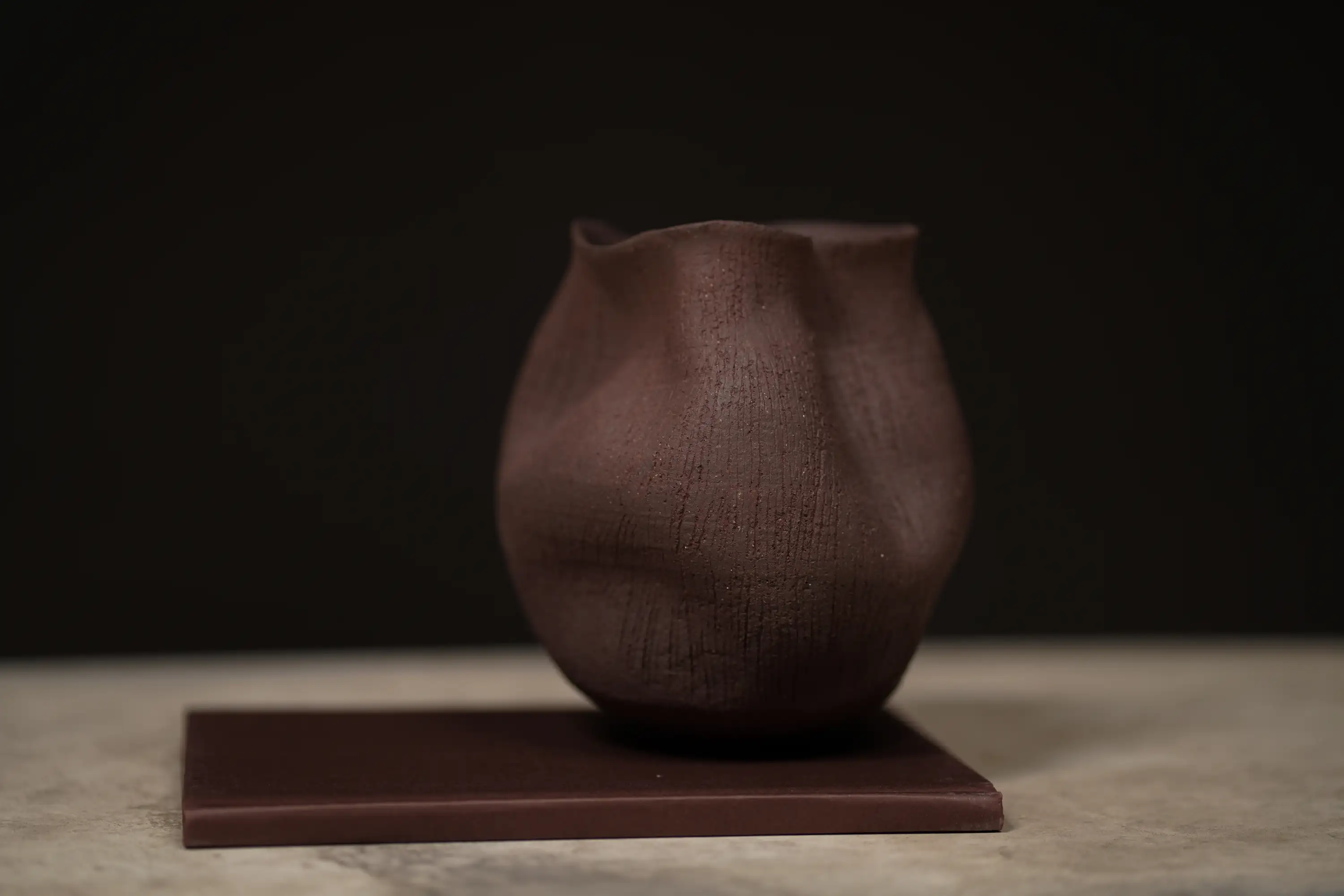
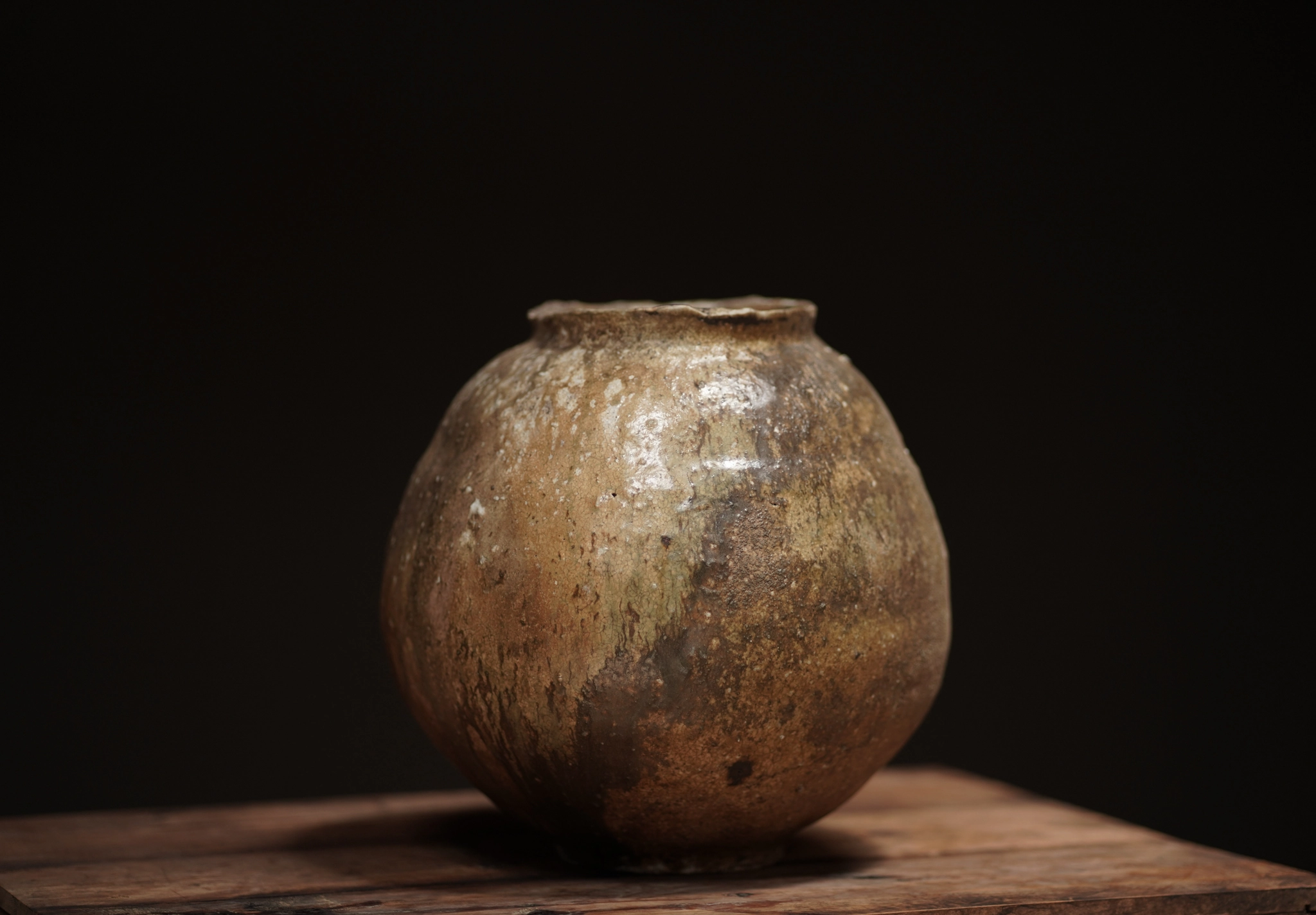
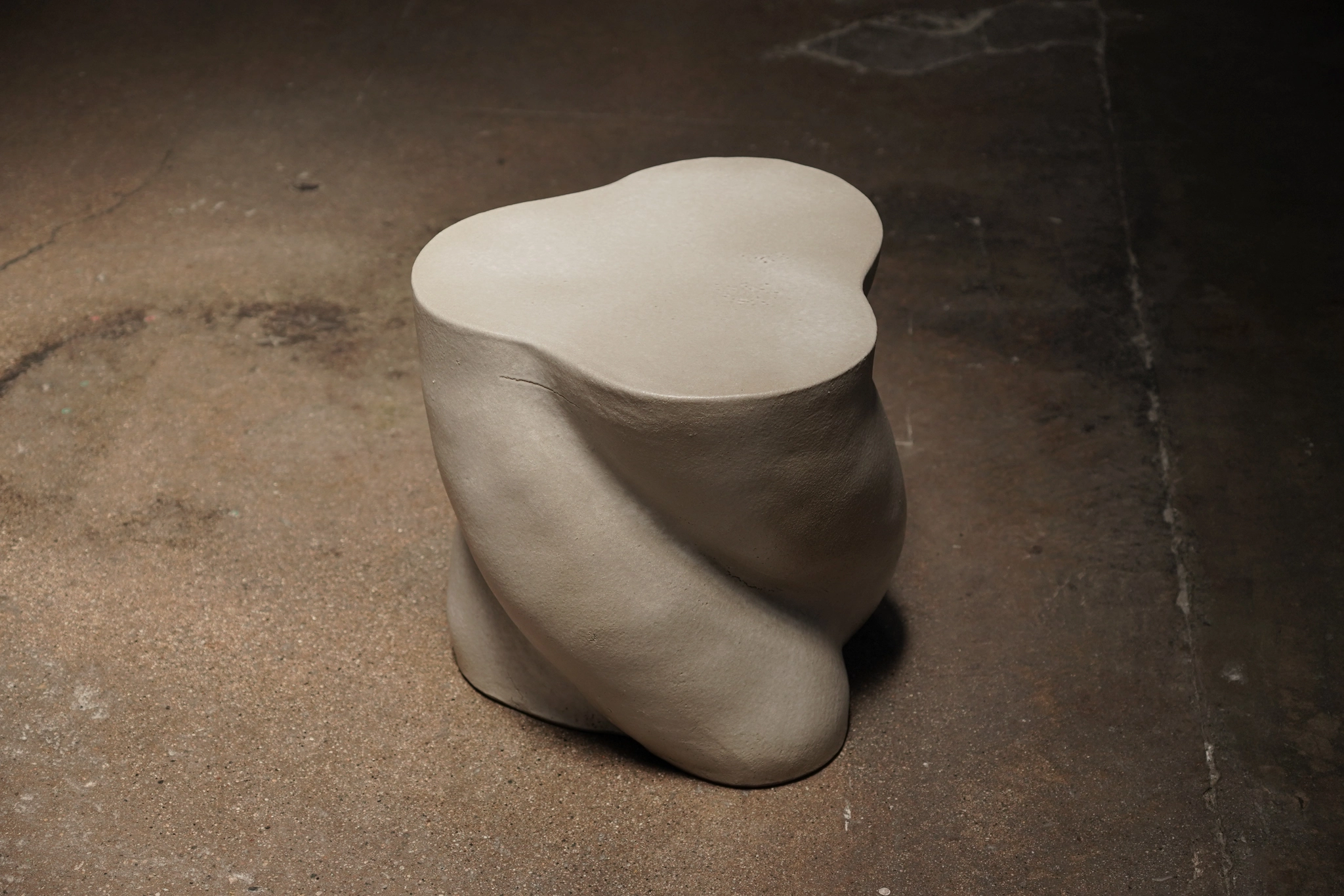
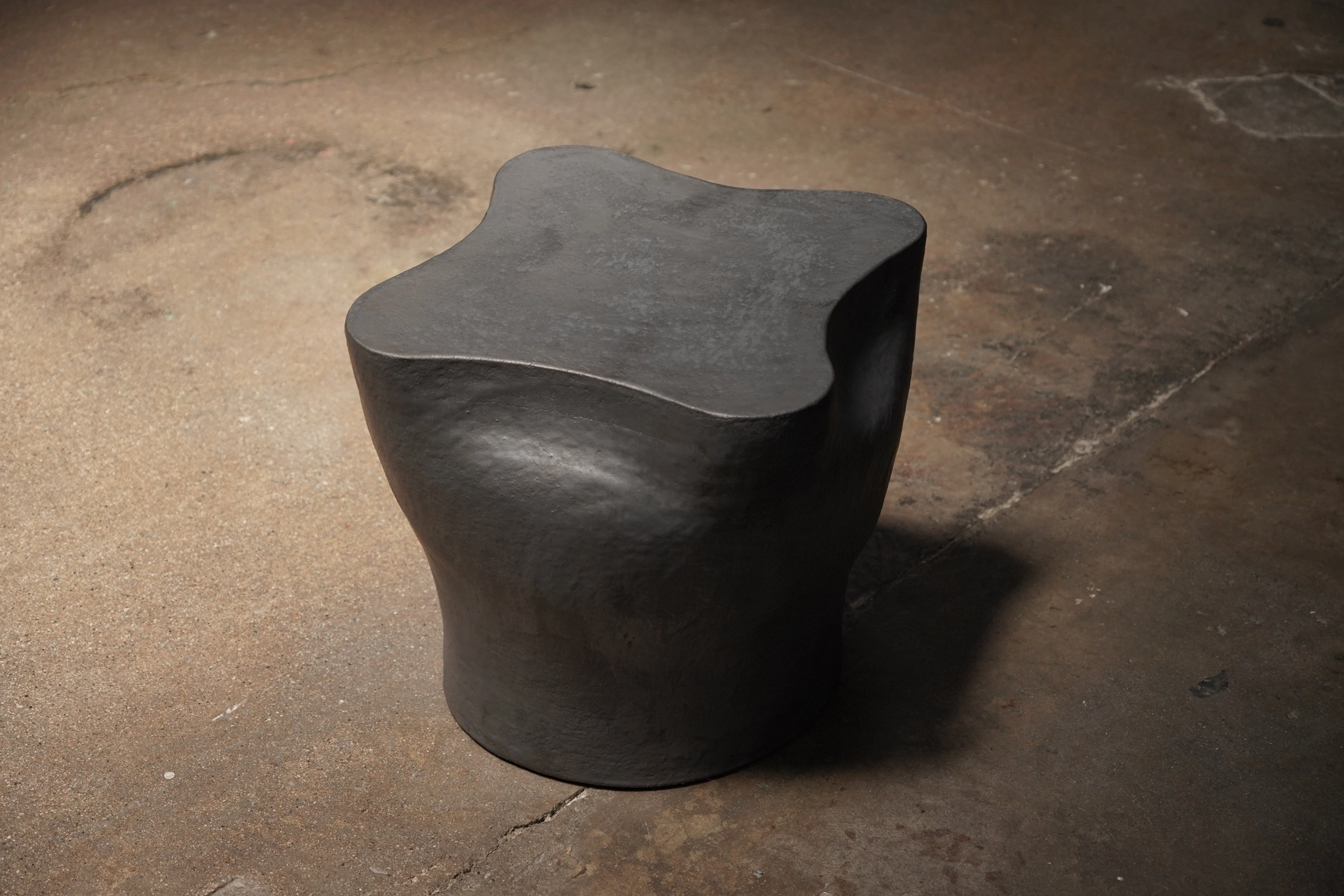
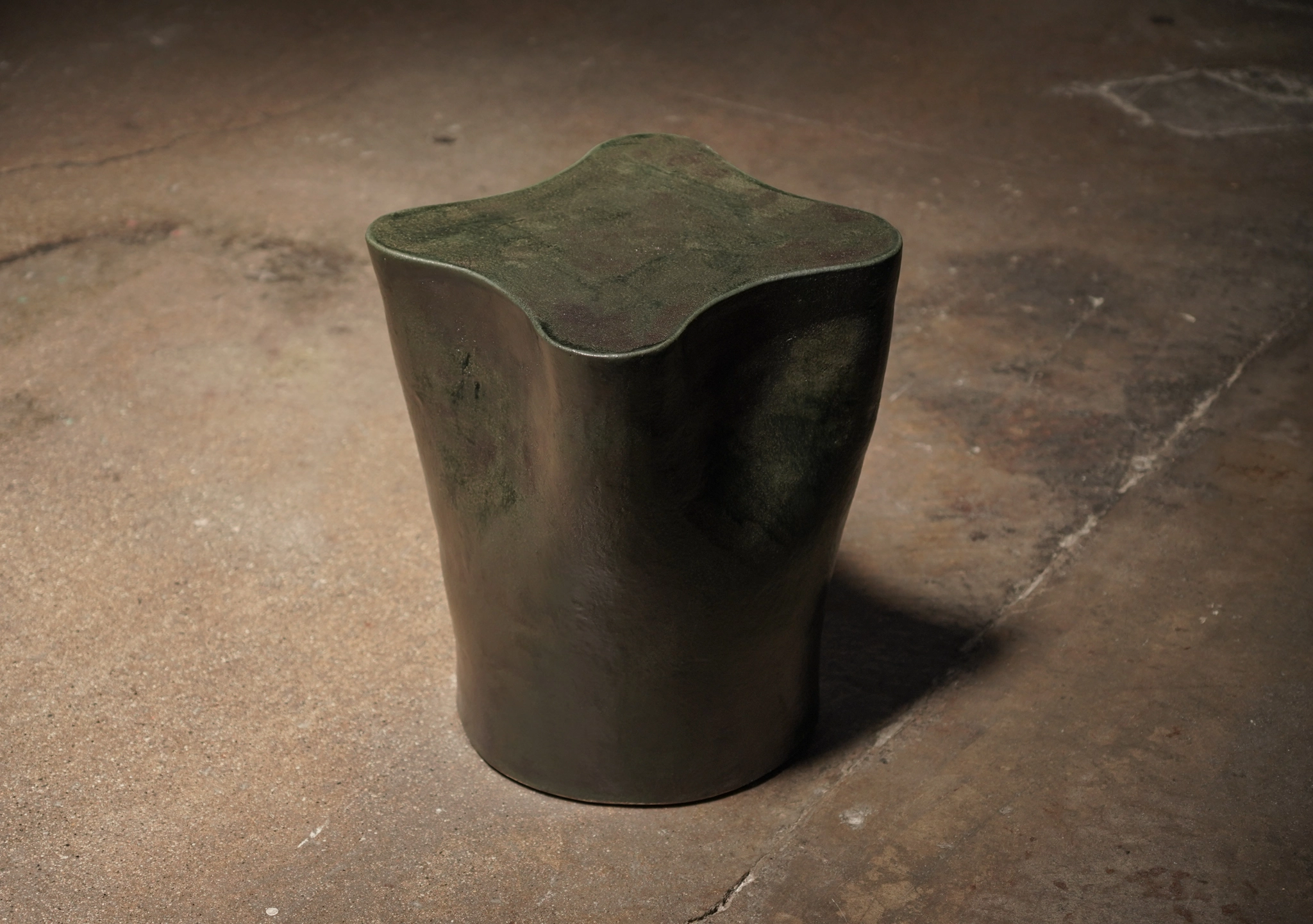
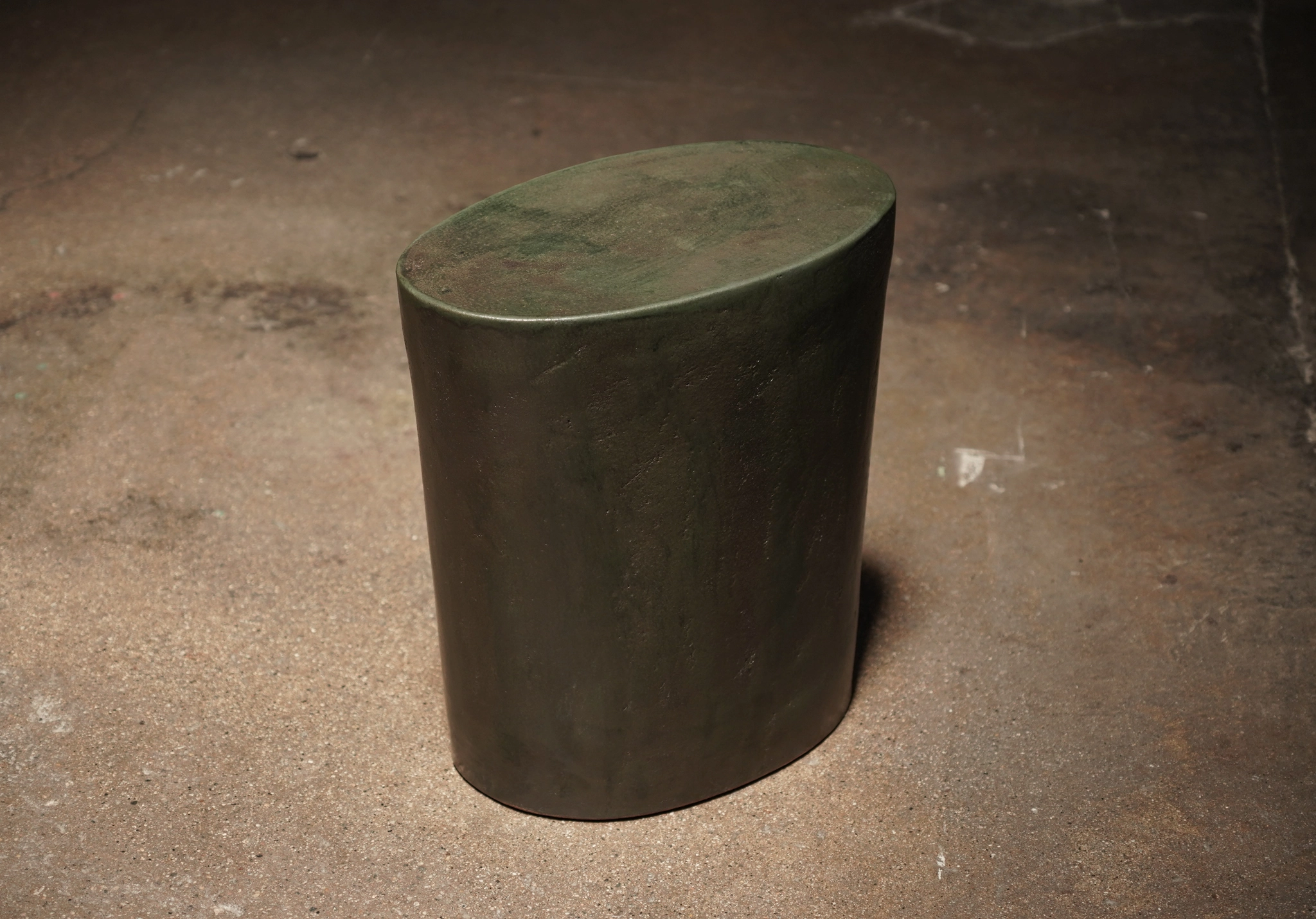
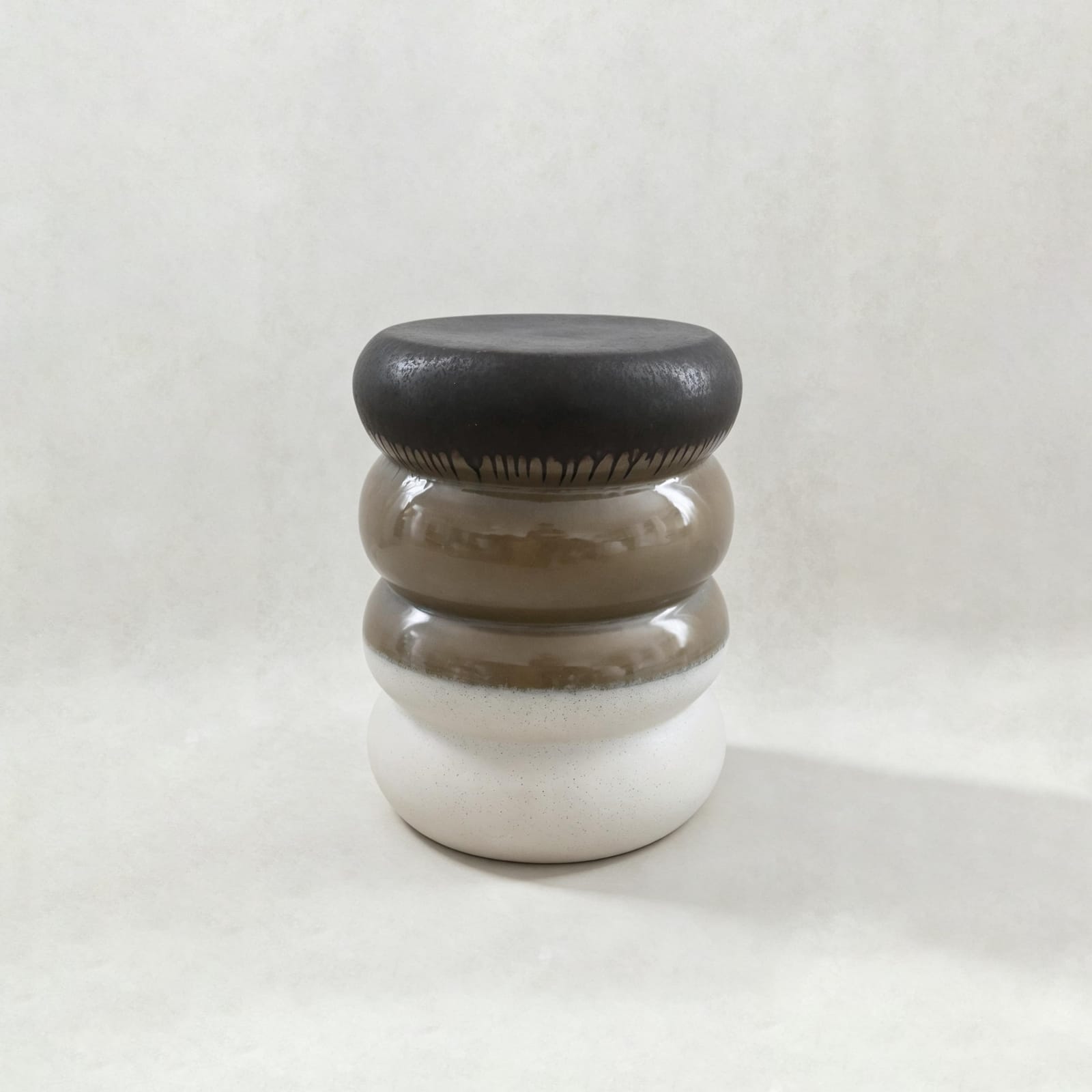
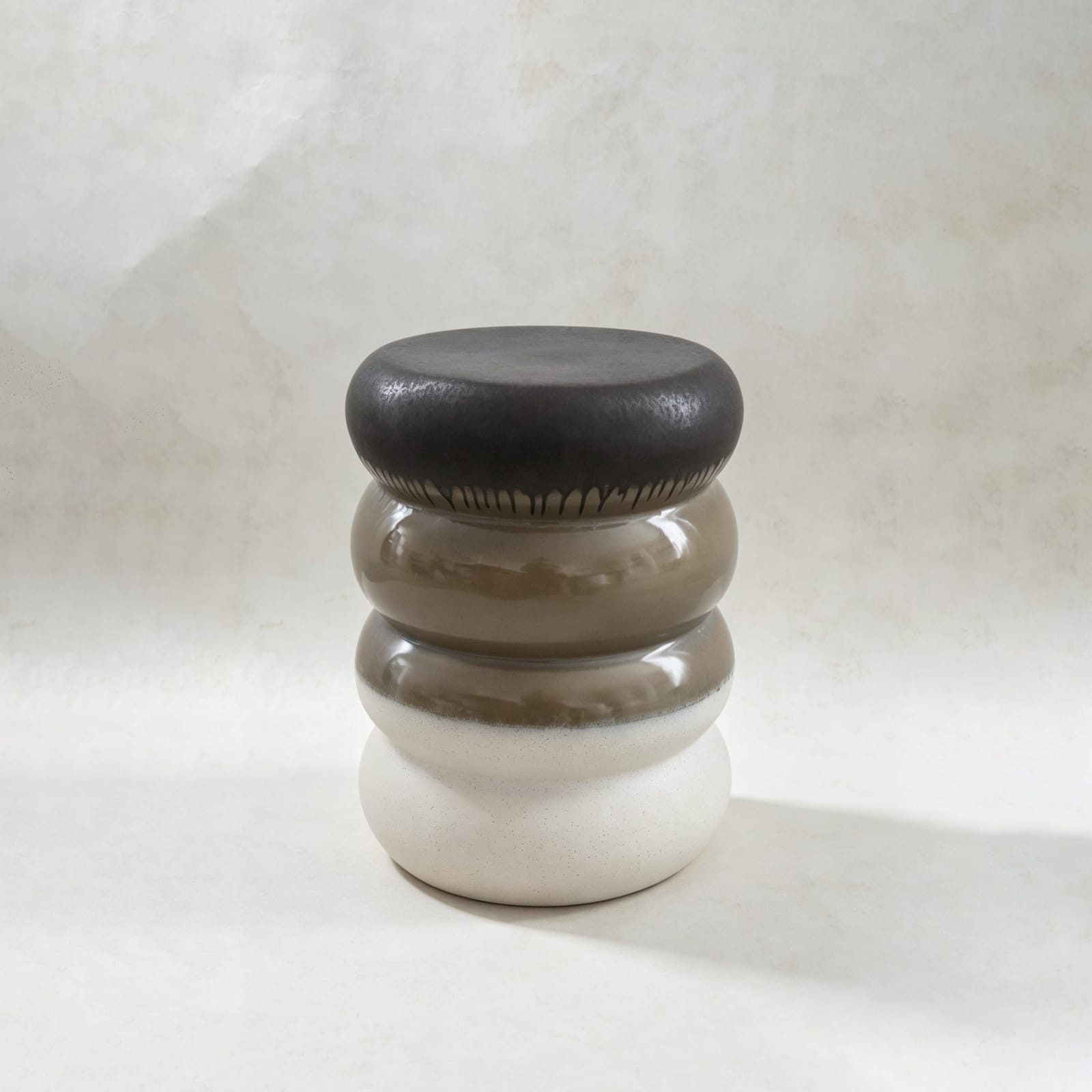
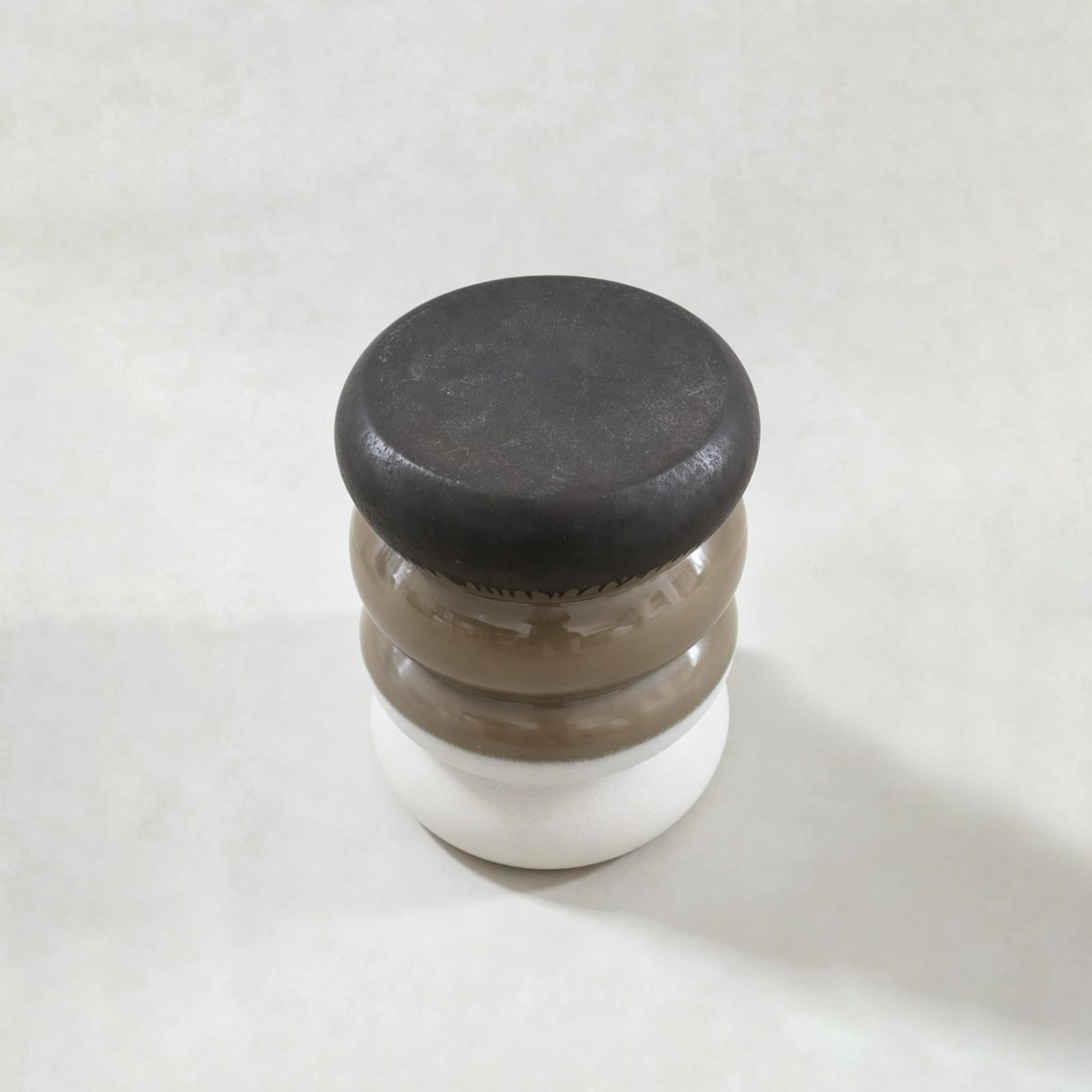
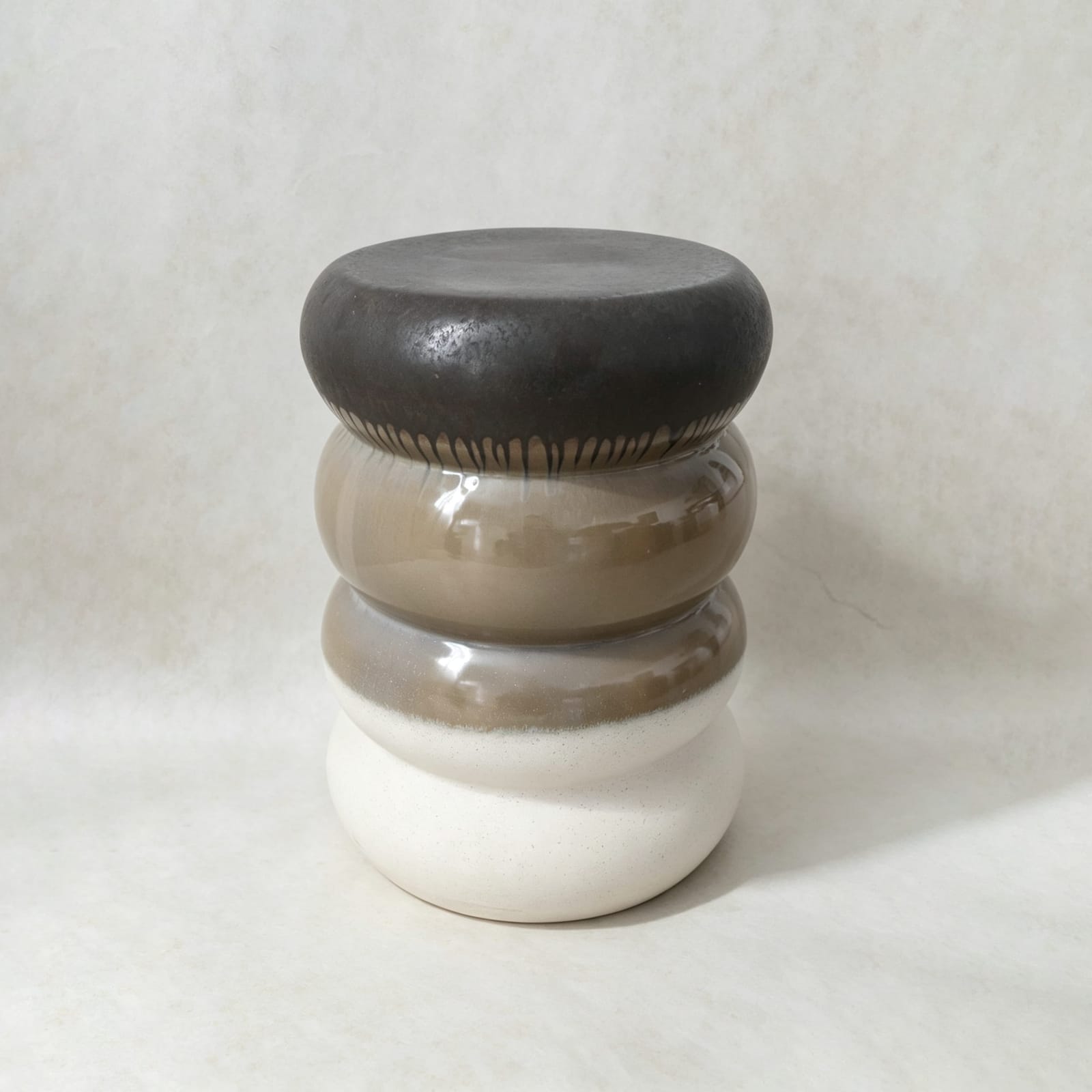
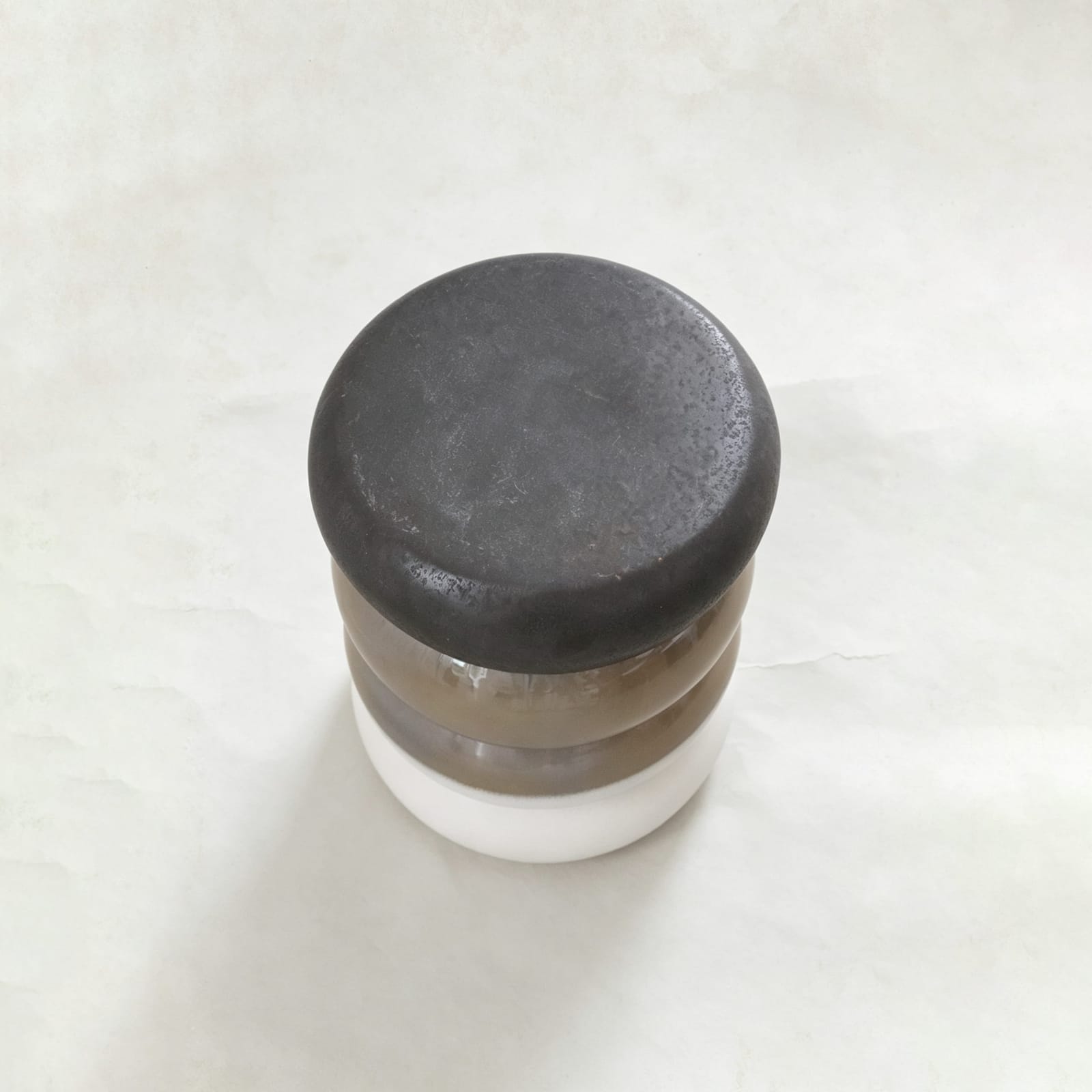
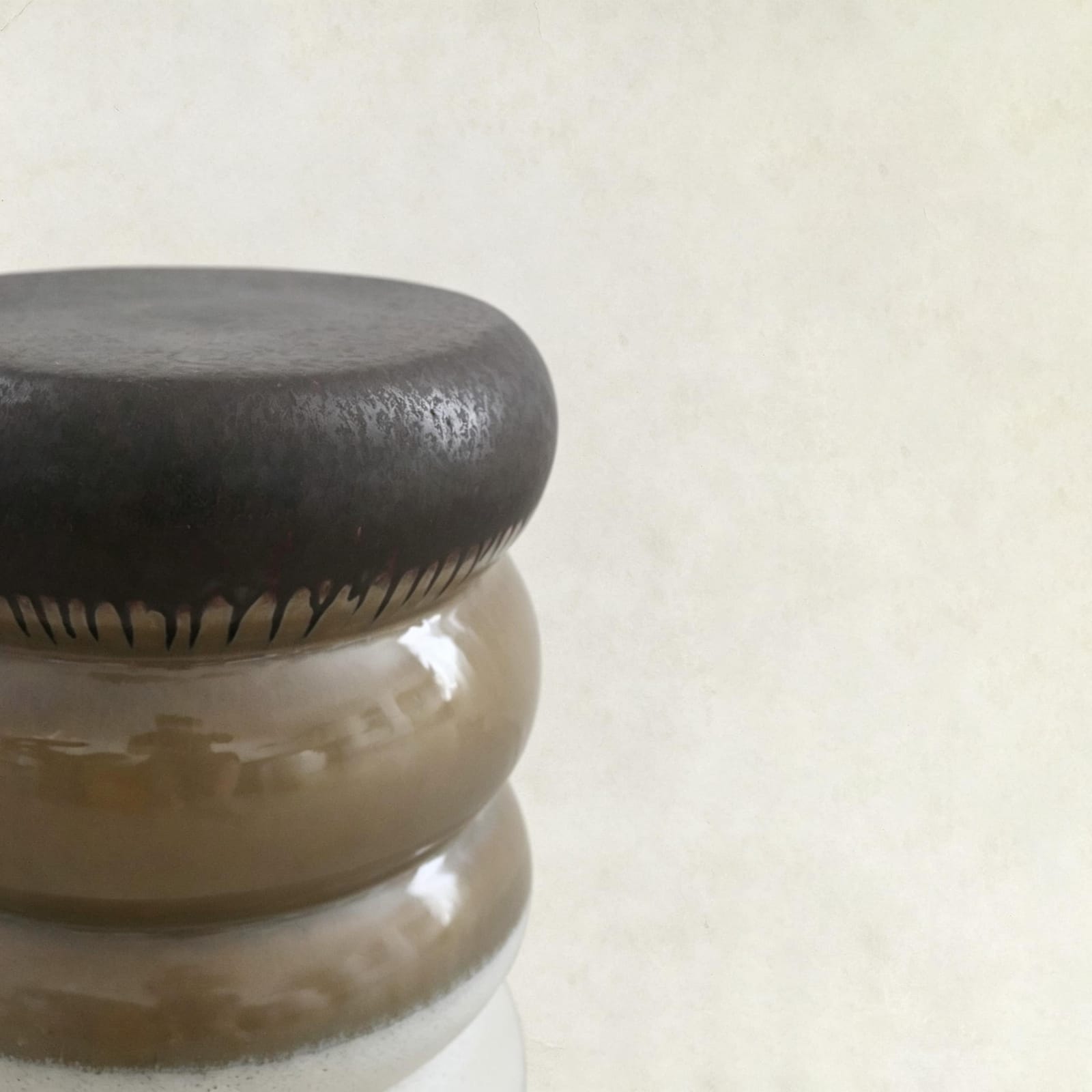
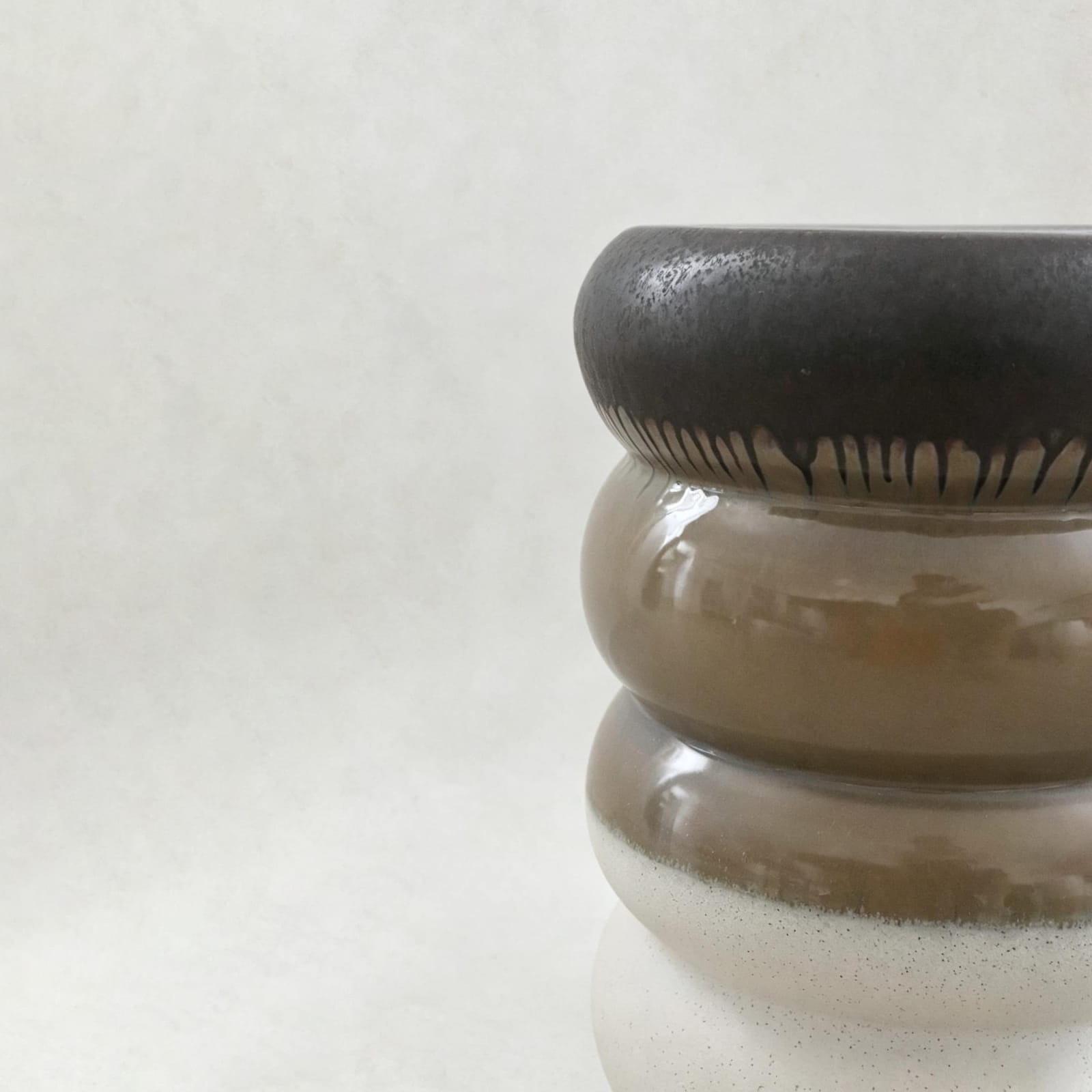
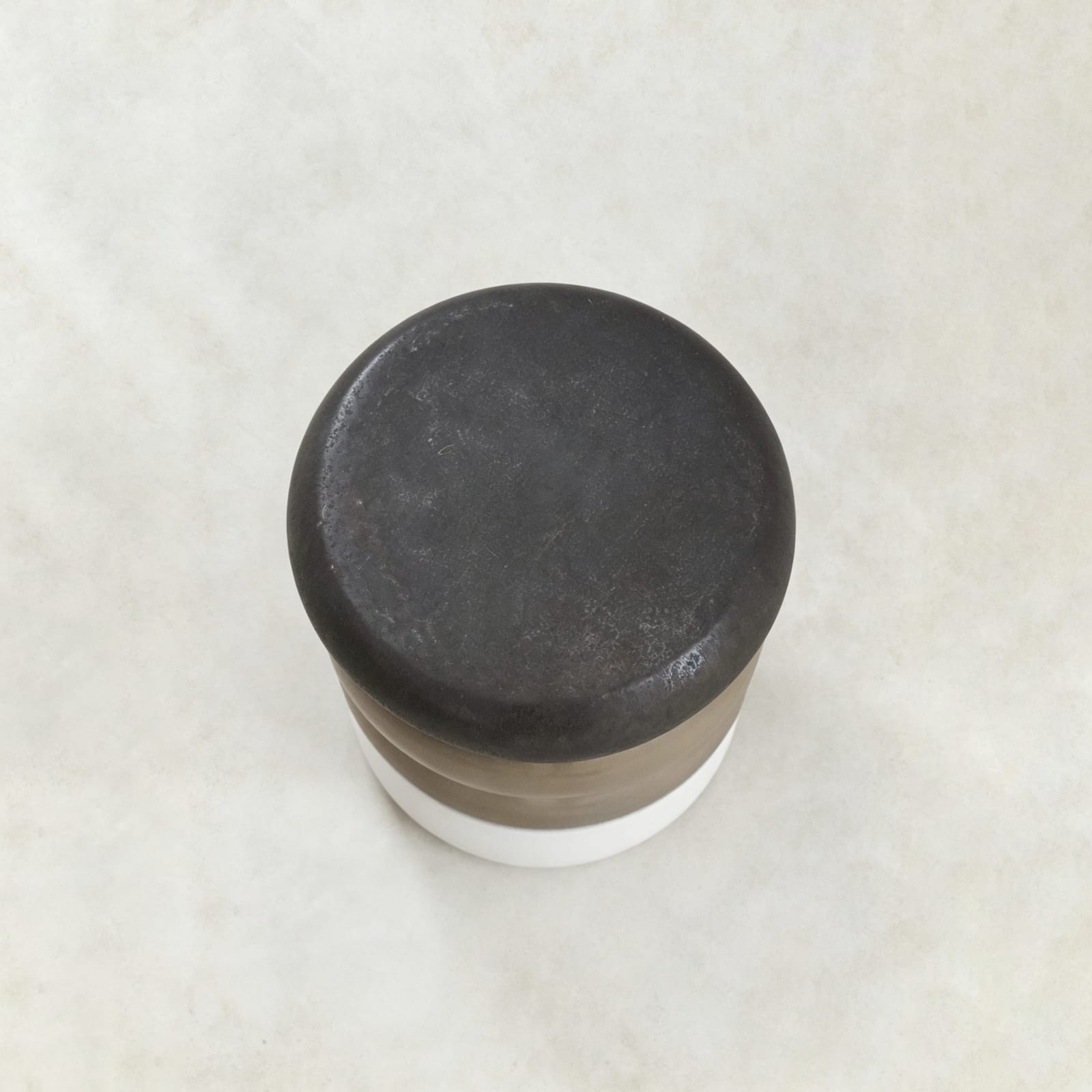
埏土塑层廓,窑火凝清光;埏,出自《道德经》「埏埴以为器」,指揉捏陶土、塑造器形;凝,窑火淬炼,将流动陶土与垂落釉色凝定为恒久形态。取埏土塑形,窑火凝器之意。器身四段饱满圆腹循序堆叠,柔和曲廓层层向上舒展。顶面哑光深釉自然垂落,如熔融陶釉顺势而下,釉色自上而下由浓淡渐变;哑光顶面与亮润器腹形成明暗质感对照。 源于古老埏埴造物之道,不依托山水纹饰,仅凭陶土形体与自然窑变釉色表达美感。一物多用,可作坐凳、花几、空间陈设边几。 静立室隅,可观塑土成器的东方智慧。形体有序,釉色随性,人工塑造与窑火天工相融,于一室之间,安放质朴沉静的造物意境。
Kneading clay to shape layers, kiln fire solidifying a clear luster; "Shan," derived from the "Dao De Jing"—"kneading clay to make vessels"—refers to the act of kneading clay and shaping vessel forms; "Ning" means the kiln fire tempers, solidifying the flowing clay and dripping glaze into a permanent form. It captures the essence of shaping clay with hands and solidifying vessels with kiln fire. The vessel's body features four plump, rounded sections stacked in sequence, with gentle curves extending upward layer by layer. The top surface, with its matte deep glaze, naturally drips down like molten ceramic glaze, with the glaze color gradually fading from dark at the top to light at the bottom; the matte top surface forms a contrast in texture with the bright and smooth body. Originating from the ancient art of pottery-making, it expresses aesthetic beauty not through landscape decorations but solely through the form of the clay and the naturally occurring glazed colors from kiln changes. This versatile piece can serve as a stool, a flower stand, or a side table for spatial decoration. Standing quietly in the corner of a room, one can observe the Oriental wisdom of shaping clay into pottery. With orderly forms and spontaneous glaze colors, human craftsmanship blends seamlessly with the natural artistry of kiln fire, creating a simple and tranquil ambiance of creation within the space.